Is Istria Worth Visiting? 10 Reasons To Visit In 2025
Are you planning a trip to Croatia and wondering is Istria worth visiting?
You’re in the right place—I lived in Istria for over 15 years and have explored every corner of the region.
Istria is one of the most diverse regions in Croatia, and this little peninsula is like a mini version of the whole country.
Whether you like hiking, exploring quaint towns, or spending time on the beach, Istria has something for you.
Let’s get right into the top reasons to visit Istria in Croatia!
Disclaimer: This post may contain affiliate links, which means I may receive a commission, at no extra cost to you, if you make a purchase through a link. I hope you find the information here helpful!

Is Istria Worth Visiting?
The quick answer is yes, Istria is definitely worth visiting.
Istria is one of the most diverse Croatian regions, with stunning views, picturesque coastal towns, beaches, vineyards, and fun activities.
The region might seem out of the way if your Croatia itinerary focuses on the south of the country.
However, you don’t need to worry as there are many ways to reach it from Croatia and Europe in general.
Also, it is possible to explore Istria without renting a car.
Top Reasons To Visit Istria, Croatia
Istria is often nicknamed Little Tuscany as it resembles the romantic Italian region, famous for picturesque landscapes, delicious food, and charming towns.

1. Charming Towns
With over 40 towns and villages in Istria, you might wonder exactly where to go in Istria for picturesque places.
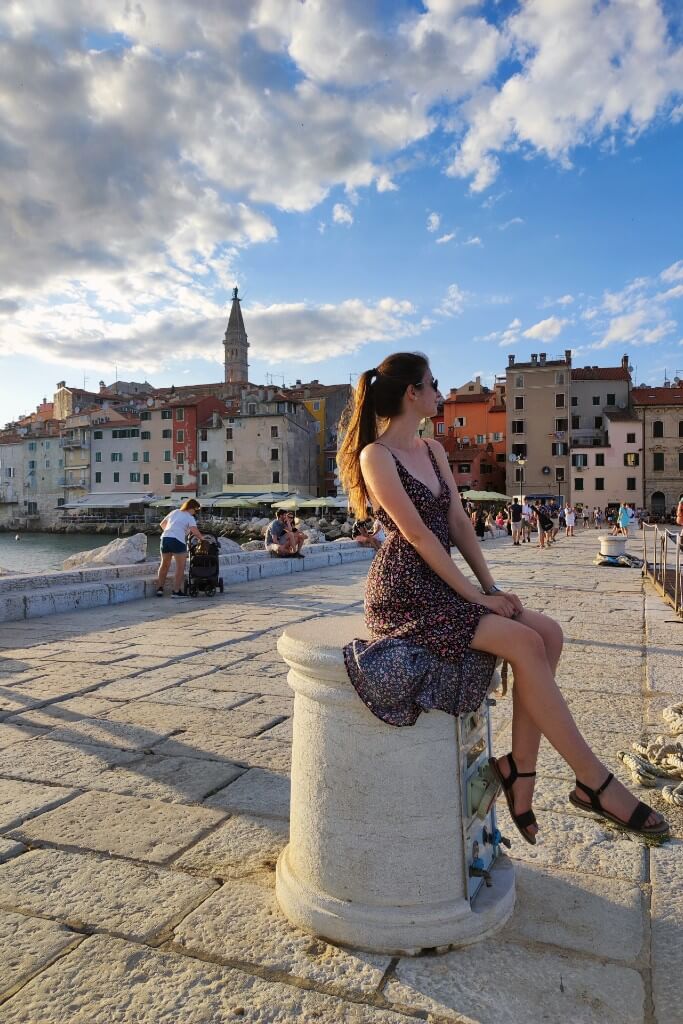
Rovinj
Rovinj is my favorite town in Istria.
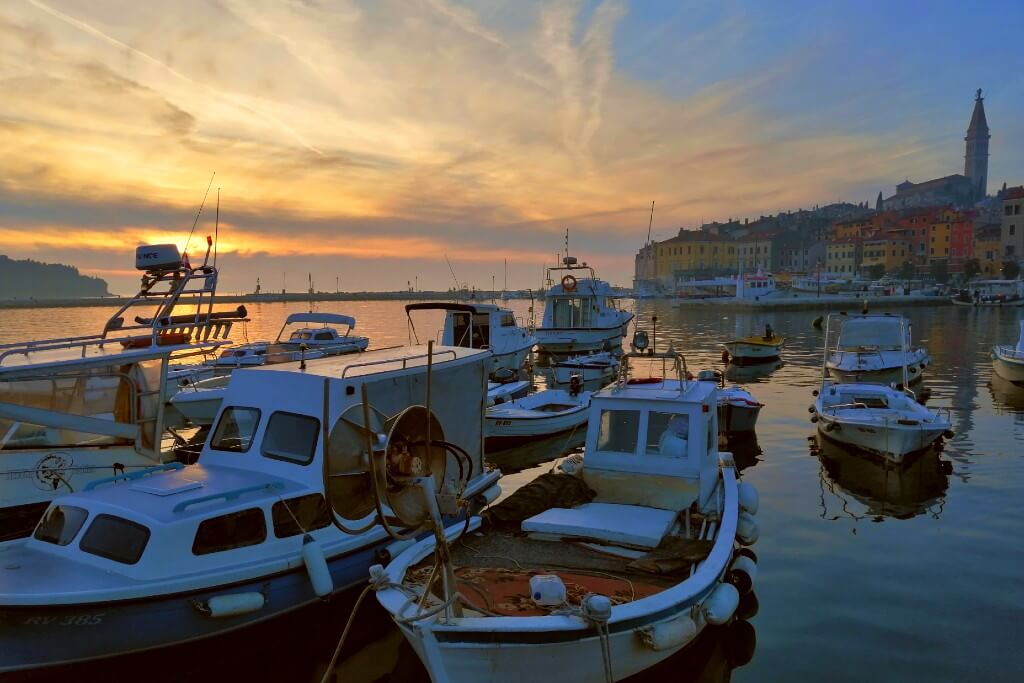
This small seafront town is the perfect place to get lost taking photos of the winding cobblestone streets, swim on pristine beaches, and admire the sun setting over the open sea.
If you’re wondering if Rovinj is worth visiting despite not having an airport? The answer is yes, it is well worth visiting!
Motovun
Motovun is a medieval hilltop town, currently on UNESCO’s tentative list, but with 26 cultural heritage sites, it should be listed in no time.
The view from this town perched on the top of the hill is outstanding. The lookout on the city walls overlooks the valley, river Mirna, and hilly central Istria.
Grožnjan
Grožnjan is another hilltop village in central Istria. It used to be one of Istria’s best hidden gems. The village got the nickname “the village of artists” as it is home to many artists who gave it a unique decorative touch.
Pula
Pula is a must-visit, the largest town in Istria and the unofficial region’s capital. The city is best known for its Roman ruins, including one of the best-preserved Roman amphitheaters, intricate ancient gates, and August’s temple.
Poreč
Poreč is home to Istria’s only UNESCO World Heritage site – the Episcopal Complex of the Euphrasian Basilica.
The Old Town of Poreč is the perfect place to stroll the streets on warm summer nights or enjoy the nightlife in one of the seafront bars.
Labin
Labin is one of Istria’s last hidden gems, situated on the less visited eastern coast of Istria. The Old Town of Labin, with its stone houses and cobblestone streets, is a great place to explore before making your way down to the resort town of Rabac.
Bale
Bale is a small village halfway between Rovinj and Pula. It gained popularity recently thanks to its picturesque cobblestone streets and unique stone houses.
🤩 Are you short on time and want to see the best of Istria?
Check out this Istria in 1 Day Tour!

2. Historic Landmarks
Istria is home to several remarkable historical landmarks, from prehistoric times, through the Roman era to Venetian rule.
Pula
The largest Istrian town of Pula should be on every Roman history lover’s itinerary.
The city is home to several well-preserved Roman monuments, the best things to see in Pula are the Arena, Twin Gates, and The Temple of Augustus.
Poreč
The Episcopal Complex of the Euphrasian Basilica is a group of religious monuments dating back to the 4th century when Christianity was established in the region.
Svetvinčenat
Morosini – Grimani Castle in Svetvinčenat is the best-preserved castle in Istria, dating back to the Venetian era.
Dvigrad
If you like discovering places off the beaten path, you’ll love the ruins in Dvigrad. You can walk through the ruins of the medieval town and the castle dating back to the 9th century, which was abandoned in the 18th century.
Nesactium
Nesactium is an archeological site close to Pula. It is considered to be the capital of the Histri, a tribe that lived in the area from the early Iron Age until the Romans took over.

3. Beautiful Beaches
Istria is a coastal region, so you can count on visiting excellent beaches if you come in the summer.
Beaches in Istria are either pebbled coves or rocky cliffs. There might be an odd sandy beach, like the beach in Medulin or Zambratija near Umag, but they are not tropical sand beaches.
For example, beaches in Pula range from picturesque pebbled coves to rocky cliff-jumping beaches.
Istria is home to some of the most affordable beaches in Europe, and it is a great alternative to overpriced islands and southern cities.

4. Stunning Nature
Istria is a green region with numerous parks and forests. One of my favorite things about living in Istria was how easy it was to find places to get away from the city noise and enjoy nature.
Brijuni National Park
Brijuni Islands is the only national park in Istria. The Brijuni National Park is comprised of 14 islands and islets, with the most popular being the largest Veliki Brijun.
A fun fact about Brijuni is that you’ll find a large herd of deer roaming freely around the island.
Zarečki Krov
Zarečki Krov is an impressive wide waterfall rushing over a rocky overhang into a bring blue pool. It is a popular spot for swimming in central Istria during summer, but always an exceptional sight.
Sopot Waterfall
Another beautiful waterfall in Istria is Sopot Waterfall near the hilltop village of Gračišće. Sure, it is not Plitvice Lakes, but it gets rather impressive during the rainy season.

5. Delicious Cuisine
When you hear that Istria is like a little Italy, that also applies to the cuisine.
If you like pizza and pasta, you’re in for a treat. You’ll find some of the most delicious pizzas and pasta dishes in Istria.
I also went backpacking in Italy, and I can confidently say that Istrians do Italian cuisine as well as Italians.
If you’re vegan traveling in Croatia, there aren’t many vegan-friendly traditional Istrian dishes. If all else fails, you can enjoy delicious olive oil with freshly baked bread and local fruits and vegetables.
The region grows most of its fruits and vegetables, so local farmer’s markets are a must-stop while you’re on your Istria trip.

6. Excellent Wine Tasting
Did you know Istria is an excellent wine region? You might be surprised to learn that, since Istria doesn’t export much of its wine outside the country.
However, if you’re a wine lover, you need to take advantage of the high-quality local wines.
The best-known variety is Istrian Malvasia, dry white wine with a fresh taste, perfect for warm summer nights. However, you can find both red and white varieties depending on the area.
I’m a sweet wine kind of girl, so my suggestion is Yellow Muscat by Vina Prodan or Vina Laguna.
If you want to go wine tasting with a view, the Kozlovic Winery and its stunning terrace overlooking the vineyards on the hills is the best-known winery for wine tasting in Istria.
🍇 Visit 3 Istrian wineries even without a car on this Private Guided Wine Tour!

7. Incredible Hiking Trails
Istria is separated from the rest of Croatia by two mountains – Učka and Ćićarija. Both offer great hiking trails to explore.
I love hiking, and I’m even a member of the Pula Mountaineering Society! However, you don’t need to be a professional to explore the mountains of Istria.
The trails are very well marked (yes, I’ve joined a couple of trail-marking actions), and most are beginner-friendly.
Some of my favorite hiking trails in Istria are the Brgudac-Korita Trail, The Trail of 7 Waterfalls, the Veliki Planik Trail, and the Sopot Waterfall Trail.
8. Unique Film Festival
Istria is home to the renowed Pula Film Festival.
It takes place during the summer months, so it is the perfect opportunity to take watching a movie in a 2,000-year-old amphitheater off of your Europe bucket list.
Since I was a kid, getting festival tickets and watching movies on a blanket in Pula Arena was the sign of the summer.
9. Endless Fun Activities
Istria is a touristic region, so you don’t have to worry about how to stay entertained during your Istria holiday.
In the summer, you’ll be spoiled for choice with beaches in Istria. Nowadays you can go kayaking or rent a SUP on most major Istrian beaches.
Also, you can join one of many boat trips in Pula or Rovinj boat excursions.
On days when the sea is too cold or wavy, visit one of Istria’s two aquaparks!
Istralandia in the north or Aquacolors close to Poreč. I visited both, and they are pretty comparable, so you can have fun going on slides on both!
If you want to try something unusual, consider spending time in Glavani Park. It is a fun rope climbing park with zip lines, wall climbing, and a human catapult.
Right in the center of Istria in Pazin, you’ll find one of the best adrenaline activities in the region – Zip Line Pazin Cave. The zip line consists of two routes. The first one is shorter and the second longer and faster, but you’ll get incredible views from both!
If you like exploring quaint towns, make sure to stop by Hum – the World’s smallest town, and visit the unique Glagolitic Alley close to it.
10. Affordable Prices
Finally, one of the top reasons to visit Istria is the affordability. Even though the prices have risen in recent years as the popularity of the region increased, Istria is still great value for money.
To be clear, Croatia is not THAT cheap to begin with. When compared to the average cost of backpacking Europe, it would be among the mid-range countries like Spain and Portugal.
It is possible to stay on the budget when visiting Istria.
Most Istria attractions are completely free to visit. At the same time, luxurious activities like wine tasting in Istria are much more affordable than wine tasting in Bordeaux.
Istria will seem especially affordable when compared to prices in Dubrovnik or some of the more popular Croatian islands like Hvar or Korčula.
If you visit Istria in October, September, or even May, you can enjoy great weather and incredible accommodation for a fraction of the price.
Is The Eastern Istrian Coast Worth Visiting?
Most of the best things to do in Istria are located inland or on the west coast, so you might be wondering if the eastern Istrian Riviera is worth visiting.
I visited many villages and several beaches on the east coast over the years, and they can’t compare to the western Istrian coast.
There are villages between Pula and Labin, but not nearly as picturesque as the hilltop villages in Central Istria.
Most beaches along the east coast of Istra, apart from Rabac, are rocky and unsupervised. I accidentally walked into a nudist area once or twice, but that is to be expected with wild beaches in Istria.
Labin is quite a charming town, and it is worth planning a day trip to Labin and swimming in Rabac if you have time on your Istria itinerary.
How To Get To Istria, Croatia?
You can get to Istria by land, air, or sea!
Flying
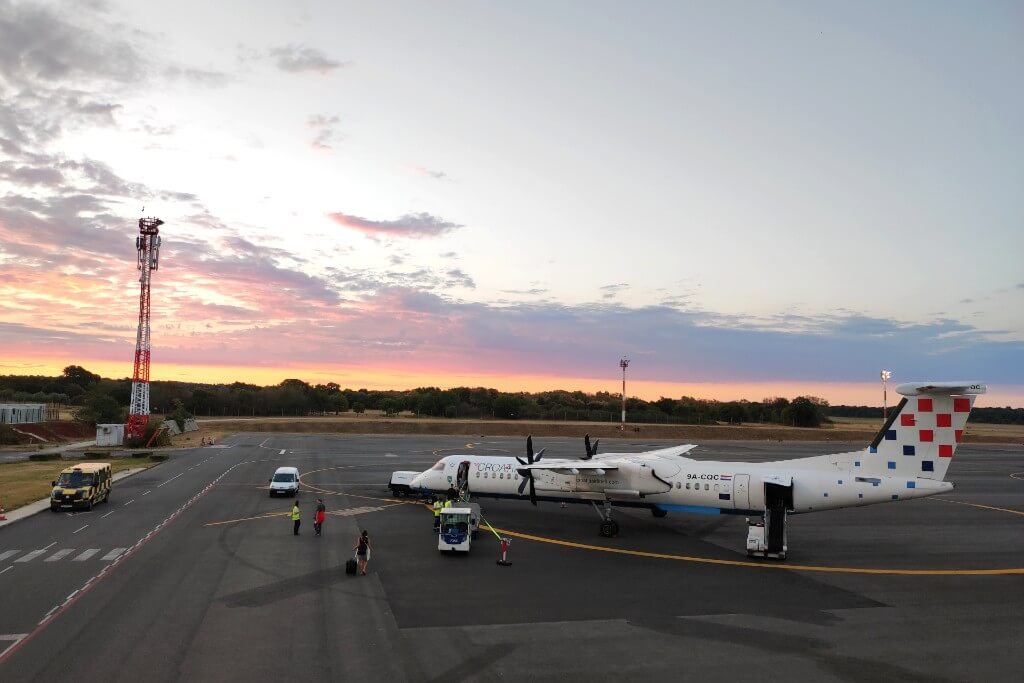
The best airport to get to Istria is Pula Airport, situated in the south of the region.
Pula is well connected to many European destinations from April to October, including several budget airlines like Ryanair and easyJet.
From October to April, Pula Airport only offers domestic flights.
If you’re visiting Istria outside the summer months, you can fly to Venice or Trieste in Italy and then take a bus or drive to Istria.
By Bus
The most common way to get to Istria from other places in Croatia is by bus.
The easiest way to get to Istria is from Zagreb or Rijeka. If you’re coming from Dalmatia, you’ll likely have to transfer in one of these cities, or the ride will take over 10h.
If you’re coming from Zagreb, the bus will take about 4 hours, while a bus from Rijeka takes about 2 hours.
It is also possible to get a bus to Istria from neighboring countries. For example, you can take a bus from Trieste and Venice in Italy or Ljubljana in Slovenia.
By Catamaran
Catamaran might seem like an unusual choice, but it is the best option if you’re trying to get to Istria from Dalmatia in the summer.
I took a catamaran from Pula to Zadar, and it was way more comfortable than expected!
By taking a catamaran, you avoid traffic jams, you can walk around the boat, and you’ll be in Pula from Zadar in less than 5 hours.
🚢 Check Pula-Zadar catamaran departure times here!
By Car
Finally, driving is the easiest way to get to and around Istria.
It is possible to take a paying highway or free local roads. You can simply set the Google Maps app to show you roads without tolls.
Taking the highway and Učka tunnel is a quicker route to Istria, but local roads are quite scenic and enjoyable to drive on if you have time.

Best Time To Visit Istria, Croatia
Istria is one of those places that are incredible at any time of the year.
Most tourist attractions are not weather-dependent, and you can enjoy strolling the cobblestone streets of medieval towns and delicious food.
The best time for sightseeing is April to mid-June and mid-September to the end of October when the temperatures are the most pleasant.
However, if you’re coming for a summer holiday in Istria, the best time to visit is mid-June to mid-September.
The swimming season in Istria is shorter than in Dalmatia.
Mid-September is usually the last opportunity to enjoy the beaches in Istria. I’ve lived in Istria for over 15 years, and I don’t think I ever went swimming in October.

Where To Stay In Istria, Croatia?
If you’re spending time in the region, you’re probably wondering where to stay in Istria for the best experience.
You can pick one town as a base and take day trips in the region or divide your time between several cities.
I always like to divide my time between several cities to experience them during the day and night. That way you don’t have to choose whether to stay in Pula or Rovinj, and you can simply do both!
Pula
Pula is the largest city in Istria and the best place to stay in Istria without a car. The city offers numerous tourist attractions, and it is well-connected to other locations throughout the region.
Rovinj
Rovinj is perfectly located for a road trip around Istria. This small coastal town boasts unparalleled beauty, with picturesque cobblestone streets and stunning sunset views.
Poreč
Poreč is another great place to stay in Istria for the beaches, cultural attractions, and nightlife.
Motovun
If you’re visiting Istria outside the summer months and want to experience central Istia and complete relaxation in a rural setting, Motovun is the place for you.
Getting Around Istria, Croatia
By Public Transport
Most towns and villages in Istria are served by public transport – bus or train.
However, public transport is geared more towards locals than tourists, so there aren’t many bus lines connecting smaller towns and villages.
Instead, most bus lines gravitate toward bigger towns like Pula, Pazin, or Rovinj.
It is possible to get around Istria by public transport if you stay in one of the bigger towns. If you want to escape the crowds in one of the villages, you’ll need a car to get around.
By Car
Driving is the best way to get around Istria. If you can rent a car, your trip will be much more pleasant. You’ll be able to easily reach all the remote villages and hiking trails.
If you haven’t already arrived by car, there are plenty of places where you can rent a car in Istria.
When driving in Istria, you can take a paying highway or smaller local roads. It is easy to select the no tolls option on Google Maps.
Local roads are well maintained and offer some scenic drives, especially in autumn when the leaves change colors. Unless I’m in a rush or doing long distances, I always opt for local roads.
🚗 Check the prices for renting a car in Istria here!

FAQ: Is Istria Croatia Worth Visiting?
No, Istria is not expensive to visit. While upscale villas and luxury activities are available, you can easily stay on a budget in Istria. Most tourist activities, beaches, and towns, are completely free to visit. Istria is not the cheapest summer destination, but it is more affordable than the South of France or the Cyclades in the high season.
Yes, it is definitely worth going to Istria Croatia. Istria is one of the most diverse regions in Croatia, often nicknamed Croatian Tuscany, thanks to the Italian influence in the region.
Yes, Istria is part of Croatia. It is located on the north-western Croatian coast, and it is one of 20 Croatian counties. However, while the majority of the Istrian peninsula is part of Croatia (89%), a small strip in the north is also part of Italy and Slovenia.
The majority of the Istrian Peninsula today is part of Croatia, with only a small tip in the north belonging to Italy. The region has been part of Italy several times throughout history, and you can see Italian influence. Even to this day, street names in Istria are bilingual – Croatian and Italian.
Istria is located on the northwest Croatian coast. The peninsula borders Slovenia by land and Italy by sea.
No, Istria is not a country. Istria is a region in the country of Croatia.
Summary: Is Istria Worth Visiting For Tourists?
As one of the most stunning Croatian regions, Istria is well worth visiting.
From remarkable historical sites in Pula to charming medieval hilltop villages like Motovun and Grožnjan, you’ll be in awe when traveling through the area.
Whether you’re visiting Istria as a stop on your Croatia itinerary, or you’re spending your summer holidays beach hopping in Istria, you’ll have plenty of things to do!
Starting to plan your Istria trip? Check out these next:
- Is Rovinj Worth Visiting? Istria’s Most Charming Town
- 9 Rovinj Instagram Spots You Can’t Miss!
- Is Pula Worth Visiting? 15 Reasons To Visit Pula
- Pula Or Rovinj: Which One Is Better To Visit
- Local’s Guide: 15 Best Beaches In Pula, Croatia
- Vegan Croatia Guide: Is Croatia Vegan Friendly?
- Pula Or Zadar: Which Croatian Coastal Town To Visit?